Fighting Knife Crime
Knife crime in our capital has risen year on year, with over 14,588 offences recorded in 2023 alone. We have all seen tragic stories of teenagers stabbed to death on buses, in their local high streets, outside their schools.
Here in Sutton in December 2023, we were devastated by the senseless loss of 17-year-old Illya Habibi, who was tragically murdered outside of Sutton station. No young person in this country should have to live in fear of such violent crimes when they leave their homes.
That's why I've been pushing for a proper public health approach, breaking down the silo walls between agencies that deal with young people at risk of carrying a knife - to stop the problem at its root.

Westminster Hall debates
Knife crime in our capital has risen year on year, with over 14,588 offences recorded in 2023 alone. We have all seen tragic stories of teenagers stabbed to death on buses, in their local high streets, outside their schools.
Here in Sutton in December 2023, we were devastated by the senseless loss of 17-year-old Illya Habibi, who was tragically murdered outside of Sutton station. No young person in this country should have to live in fear of such violent crimes when they leave their homes.
I spoke on behalf of Sutton residents at a Westminster Hall debate in January 2025 on the need to tackle knife-crime - where I called on the Government to finally adopt a whole-of-society approach so that we can cut knife crime out at the root.
We need to bring youth clubs, social workers and businesses in to reach young people before they give up on anything other than carrying a knife.
For too long we have allowed the Government and the Mayor to get away with half-measures, rather than investing in a whole-of-society approach to reducing knife crime.
I held my first Westminster Hall debate in February 2025, and used the opportunity to outline the steps we need to take to adopt that approach.
Surging knife crime on London’s streets can't just be punished away with tougher sentences and stronger deterrents.
We need a Public Health Approach, like the one that worked well in Scotland, which focuses on protecting funding for early intervention programmes, knocking down the walls between different organisations working with vulnerable young people, and restoring proper, old-fashioned community policing.

We've hidden Luke Taylor MP makes moving speech on tackling Knife Crime to prevent cookies being set that you haven't consented to. Please enable marketing cookies to see it.
Go to YouTube
We've hidden "Londoners are sick of senseless stabbings" - MP calls for new approach to knife crime in London. to prevent cookies being set that you haven't consented to. Please enable marketing cookies to see it.
Go to YouTubeWorking with campaigners
I've held meetings with the Secretary of State, local anti-violence charity - the Chris Donovan Trust, and the Ben Kinsella Trust - all of which have reaffirmed my belief that the Government needs to change tack and properly implement a public health approach.
In March 2025 I spoke in the Commons chamber about what that involves - including joining up the various bodies working with young people to make sure we are keeping them safe and out of gangs.
The Public Health Approach, which breaks down the walls between the various agencies that work with young people and enabling them to work together to educate young people about the dangers of carrying a knife and getting teenagers to stop carrying them altogether.
A huge part of that work revolves around youth services, who often do great work with at-risk young people but who are chronically underfunded and continue to be cut. I spoke up in Parliament about this, encouraging the Government to reverse these cuts and make youth services a statutory requirement for local councils.
I also visited the Ben Kinsella Trust, who do a fantastic job in leading the education process for young people about knife crime.
Founded in memory of Ben Kinsella, an innocent bystander who was stabbed to death in 2008, the Trust hosts a very moving exhibition in Islington that provides great educational visits for schools. I strongly encourage any teachers reading this to organise a visit.

We've hidden Lib Dem MP calls for schools to teach Restorative Justice to prevent cookies being set that you haven't consented to. Please enable marketing cookies to see it.
Go to YouTube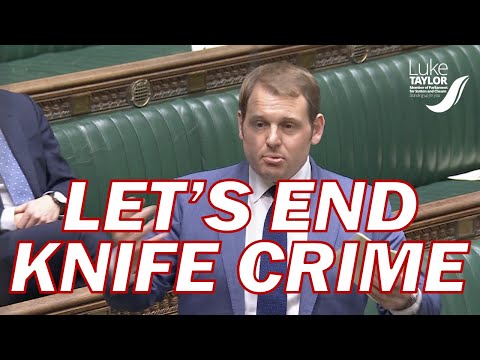
We've hidden Bringing people together to end knife crime. to prevent cookies being set that you haven't consented to. Please enable marketing cookies to see it.
Go to YouTube
We've hidden Luke Taylor MP on standing up for Youth Services to prevent cookies being set that you haven't consented to. Please enable marketing cookies to see it.
Go to YouTubeWe can't do any of this without the police
Across a range of criminal activities that are blighting peoples' lives in Sutton and Cheam - not least others that I'm working to combat like stalking, burglaries and tool theft - we know that one of the best ways to combat them is to restore proper community policing. Knife crime is no different.
The last Conservative government and successive Mayors have let down Londoners by allowing Officer numbers to fall and letting the process of "abstraction" (where outer London officers are pulled in to fill shortages and major events in inner London) to get out of control.
Speaking to many of you on the doorsteps, it's clear that almost everyone in our area feels like they never see a police officer on their street. We need to get back to a time when everyone knows a visible, active local police officer who engages with their community, knows their beats and has the resources they need to do their job properly.
Which is why it was so disappointing to have it confirmed to me by the Policing Minister this month that London will lose 1419 full-time equivalent officers and staff this coming year. It just isn't good enough - no matter how the Government tries to spin it, these numbers are appalling at a time when so many Londoners are worried about crime in their community.
We need to see proper action on reversing these cuts and getting London back to proper community policing - otherwise the public health approach will lack the police commitment it needs to truly eradicate knife crime and youth violence more broadly.
... and this issue must not be weaponised
At a Westminster Hall debate in October 2025 , I once again had the chance to hold the government's feet to the fire on taking real action to fight knife crime - with the public health approach that experts and victims are calling for.
This was the third major knife crime debate in Westminster in a year - but certainly the most unusual. Reform called it clearly with no intention to talk about real solutions. When we're talking about saving young lives, I think that's totally wrong.
I'm continuing to have meetings with with charities and experts like the Ben Kinsella Trust to make sure that the campaign to get the government to take this seriously is moving forward on all fronts. It should shame us that so many young people feel like they have to carry a knife to protect themselves.
Many of the knives they carry are not exotic or illegal zombie knives that attract the headlines - they are kitchen knives. This isn’t about organised criminality. It’s the tragic banality of a deteriorating everyday experience. That is why tackling knife crime cannot just be about enforcement. It has to be treated as a public health issue.
It must be addressed early, consistently and systematically. We must bring together early intervention schemes at councils, NHS workers and carers, police officers and teachers, community leaders and social media influencers, bereaved parents, mental health workers and restorative practice advocates, and the various arms of government that young people interact with - under serious, mission-driven Violence Reduction Units.

We've hidden Luke Taylor MP fights again for the Public Health Approach to Knife Crime to prevent cookies being set that you haven't consented to. Please enable marketing cookies to see it.
Go to YouTube